
The Teal Smudge
Part 2

I’ve read that collecting antiques is never about owning the objects in your home. It’s about taking care of them and being the current custodian of them until it’s time to give them to the next caretaker. It’s intentional gathering and making sure that the pieces are well cared for so someone else can enjoy them later. I find this idea comforting.. and a little enabling.
It’s a sense of caretaking versus ownership or possession that I often think about when I look at my collections. I’m just the most current person who is in charge of them. The most recent person in a line stretching back to the person who made them. I look at the blue smudges on my dishes. Those flashes of color that prove these were made by a human being who lived and breathed and worked and slept. I often wonder, who was this person? A man? A woman? A child before labor reform prohibited such things? Were they rushing and did they never notice the mark? Did they just not care? Did anyone see the mark in the shop? Was this a normal thing to happen so no one was bothered by it? Are the smudges just a sign that these plates weren’t considered too expensive and therefore were allowed to be a little flawed? I think a lot about stuff like this because the ability to hold the evidence of an individual’s work in your hands is as close to a time machine as a human can get.
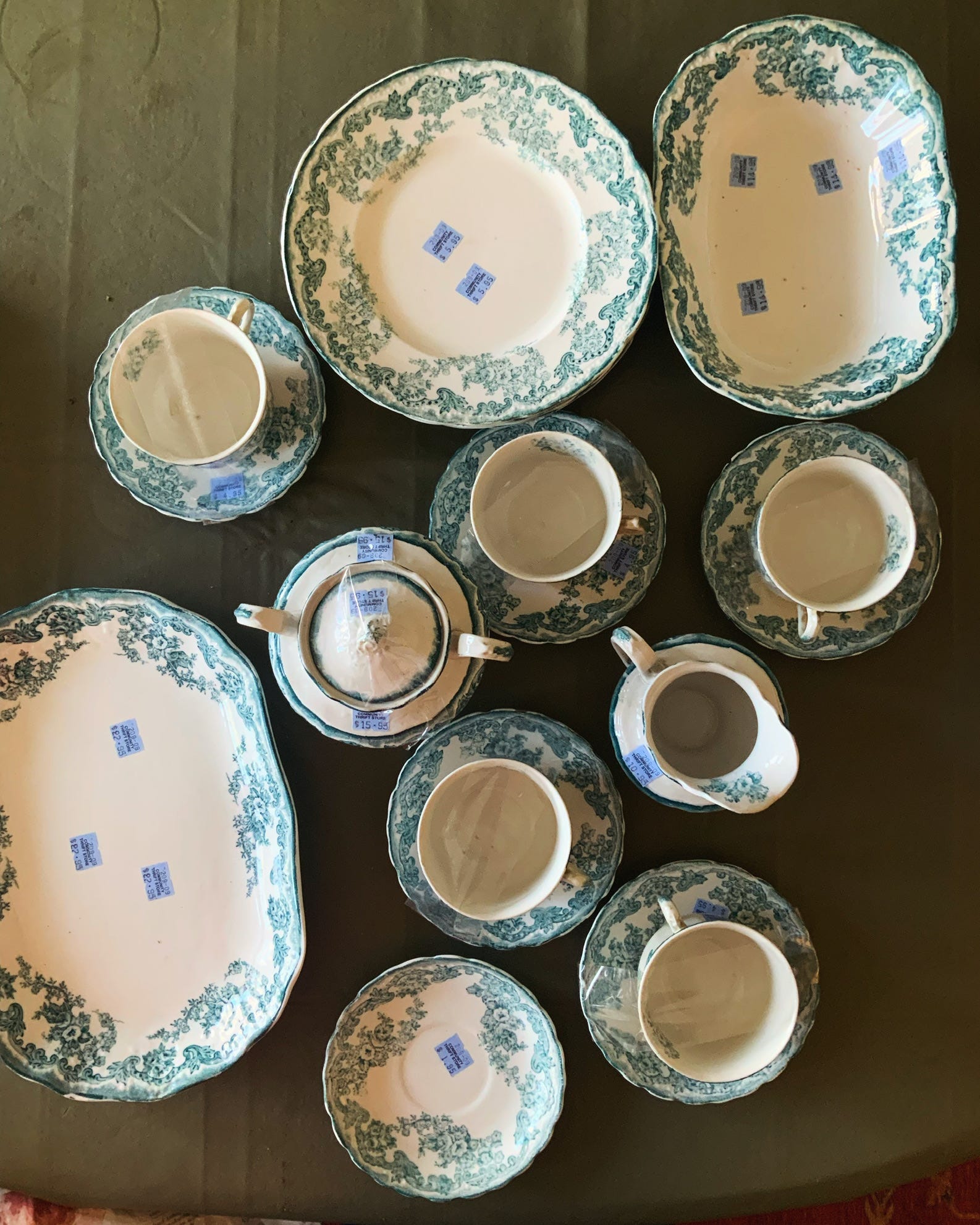
I wonder about who ate off them. Who owned them before me? What did they eat? At Thanksgiving, I think about what holidays the big platters saw and how many turkeys were served off them. At Christmas, when I pile roast beef and yorkshire pudding on the medium platters, I wonder who celebrated with their family with this platter. In the spring, when I serve strawberries and cream in the tea cups, I wonder how many cups of coffee and how many cups of tea were balanced precariously in them on the saucers.
Today these kinds of dishes are often seen as either garish, tacky and cliché or the embodiment of comfort, coziness and home. Minimalists cringe at them and maximalists celebrate them. They’re meant to be used but they’re lightweight and often feel frighteningly fragile. They, of course, get handwashed when I use them… if I use them. As Wilson discusses in her book, there’s a real fear of breaking objects like this which often leads to not using them. Sure, I pull them out for dinner parties and holidays, but Tuesday night casseroles don’t seem to warrant the “good plates”.
That sometimes feels silly and other times prudent. I have a ramshackle set of mass market “everyday” plates that I bought at the same second hand store where I found those first transferware pieces. They get tossed around and can get put in the dishwasher and they have chips and cracks to prove it. A couple of months ago I accidentally dropped one as I was putting it away and it clattered to the floor and exploded. After I got done barking out a few choice words, I cleaned up the mess quickly and got on with life. It was just a plate made in China for a brand I’ve never given any thought to. I doubt I would be so blasé if I did the same with one of my transferware plates.
But it is in using them that they gain their power. There is joy in the ownership of these plates and bowls and cups for me. Did the previous owners feel the same? Was there sorrow too? Were there tears and silences? Were the plates considered special or were they Tuesday night dinner? The Thanksgiving dinner and the Christmas buffet and the Tuesday night meal with friends should all be equally important enough to pull them down and set a nice table.
I’ve said more than once to people that I think the way you set a table for your guests reflects on your opinion of them. I’ve had dinners where I pulled everything down, polished the silver and arranged flowers and folded napkins. Some dinners still get a nice looking table that’s designed to relax people and encourage them to linger and talk. Other events have been just fine with compostable plates and utensils while we baked in the sun in my yard. Could I set out the transferware for the backyard parties? I’m sure I could but, knowing me, I’d hover and fret and worry. I suppose I could just trust my friends to treat things with respect and kindness and let them enjoy themselves. Which is what being hospitable is really all about, isn’t it? The trust of inviting someone into your home knowing they will treat it and your objects with care. So why not make that same trust agreement with myself and use the pretty plates everyday?
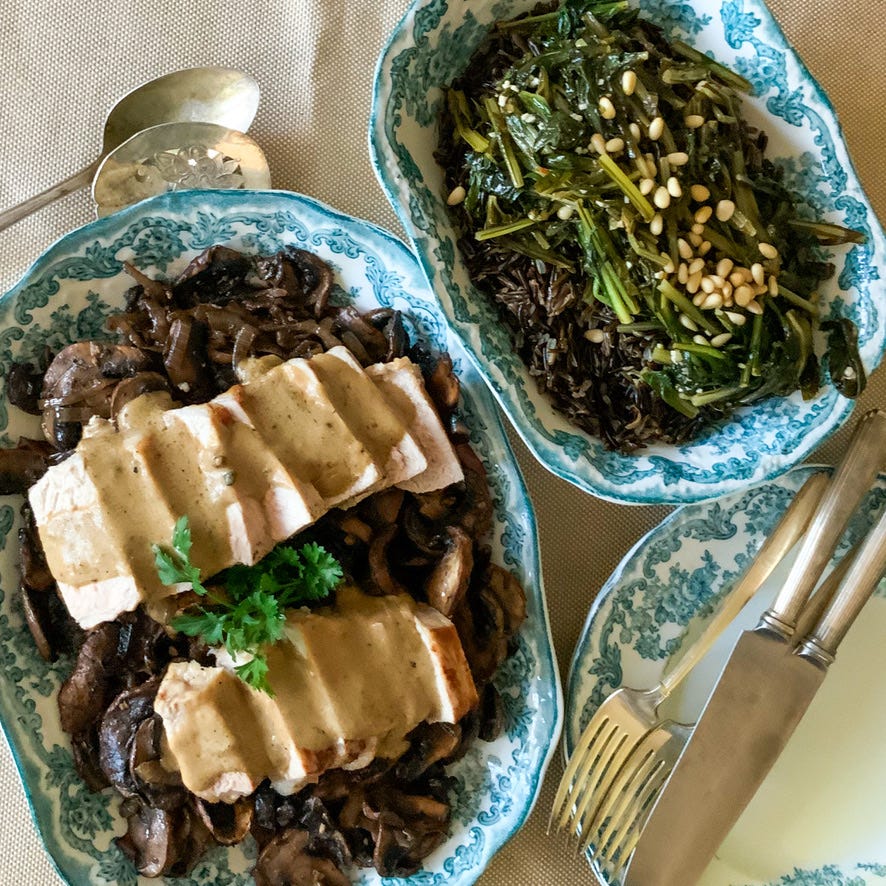
It has been suggested to me that collecting things at my age is just going to be a burden on the people who have to clean out my house after I die. I should pare down and let go. When they actually set foot in my house, they see the piles of books and the stacks of dishes that make me so happy and some get a little panicky looking as if they fear everything will come toppling over on top of them and bury them alive like something out of an Indiana Jones movie. I take the opportunity to assure them that the worst that could happen is they may stub their toe on a book about sauces and rest assured the book will suffer more damage than their foot. It’s in these moments that I realize that the collecting makes me happy and the objects themselves make me happy no matter what anyone else thinks.
As I’ve been writing this piece, I’ve spent a lot of time looking at all the antique bowls and plates and saucers and cups. I’ve looked at my cookbooks and everything else that I’ve gathered. I’ve asked myself “Why are these so important to you? What are they saying about you?” During the writing, I ate many meals off my regular dishes and a few off the transferware pieces, feeling the answer forming behind my forehead until one day it finally became clear. It’s more than me just being the caretaker of the plates. The plates and my ability to hold on to them also symbolize the work I’ve done to transform my life. Having them says that I’m not floundering as much as I was. I’m not about to lose everything to alcohol and drugs. I’m not just waiting to die. Just like having a full china set was a status symbol for my parent’s generation, these plates are a status symbol of my own self rescue and my own health. They are a direct reaction to the instability of my past and a sign to anyone who sits at my table of the changes I have made. Just as I’m the temporary custodian of these objects, I am the custodian of this body, this mind, this soul. I only have them for a short time, so I’m going to use them. Now. In the present. In my current life, I will enjoy things… while I’m alive.
Sure, I worry about what will happen to them after I’m gone or at least someplace else because I can’t take care of myself or them anymore. Will anyone care about the importance of the things that have guided me and the things that I have assembled in an attempt to create a sense of safety and stability for myself? Do I need to assign a monetary value to these things that have such spiritual value to me so they don’t end up (again!) forgotten at a thrift store? I hope not. When it’s my time to die, whoever comes along to clean out my house will at least know that I threw a damn good dinner party and I hope the objects are taken care of because they are enjoyable objects and not just things to be disposed of.
So I will use the plates I have more and keep buying more antique plates and keep learning about them. If anyone asks me “Where will you put them?” I will offer them some cake that I made from a recipe in a 150 year old French cookbook on a 150 year old plate with a blue smudge on the rim made by an anonymous person in Staffordshire two centuries ago. I will feel grateful to have a home and food and friends and pretty plates that remind me of how very lucky I am every time I use them.
First, I just realized that you had 89 subscribers -- exactly the same number as I did. I figured it would be mildly poetic to put you ahead of me by +1 ! ;)
Yes, I totally get it. I actually wrote a piece about drowning in cookbooks here that might be a fun read. As you can tell, I have a cookbook problem:
https://foodbiker.substack.com/p/the-cookbook-conundrum-revisited
I also probably have the largest antique telephone collection in the Boston area, which is problematic because I live in an apartment! LOL. Marie Kondo is looking quite sternly in my direction.
Looking forward to your next fabulous post, Kitchenbeard! :) - Seth ✦
I absolutely love this and could have written both your parts 1 and 2 myself. I got my love of collecting from my mother. Books, kitchen items, art prints, and yes, china. I have many sets of china, some very old, some quite new, which I enjoy using to create beautiful table settings throughout the year. Every time I take out a set, I wonder about the hands that previously held the plates, cups, saucers. I wonder whether that set meant something to the former custodian. I think about the cooks who prepared everything from grand holiday dinners to humble everyday meals served on the plates and platters.
My gathered objects please me greatly, and I care not whether they're "current" or on trend. Some do call it grandma-core.... I prefer granny-chic. And speaking of...I need to set an Easter table this weekend with my Georges Briard Victorian Garden 😊.