
Recipe Post: Squash Ras el Hanout Sauce

I’m working on a longer piece that is actually taking a lot of wrestling with words and phrases and research and (god help me) footnotes. It’s the kind of longer writing I want to do and don’t have time to really pay attention to but it’s giving me a lot of pleasure to do it when I can. I’ve read about some writers going down rabbit holes as they research their pieces and end up not writing at all. I find myself in the same happy predicament. I’m learning a lot… unfortunately, much of it having nothing to do with the pieces I’m working on.
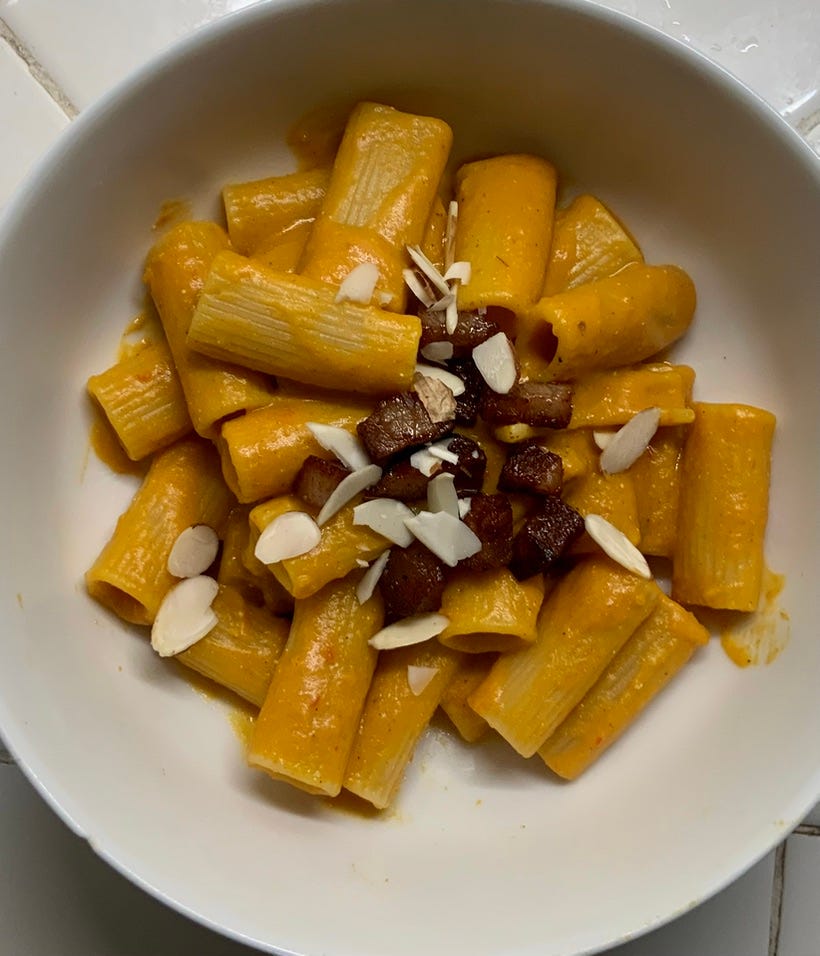
In the meantime, I still need to feed myself. While digging through my spices seeking inspiration, I found the ras el hanout that I had bought from Samiranis Imports on Mission. The original intent had been to use it in a chicken garbanzo tagine but then I looked at it and asked myself if it could work in a sauce for pasta? Of course it could. Would it pair with the squash I had sitting on the counter? Of course it would.
If you’re not familiar with ras el hanout, it’s something to add to your spice and seasoning cabinet and even learn to make yourself. Arising out of the spice trade routes in North Africa, specifically in Morocco as well as Algeria and Tunisia, the blend was often made using the best of the spices available with each seller making their own special blend of 20-301 different spices2. The resulting mix often has a deep and earthy flavor that brings vibrant color to both sweet and savory dishes.3 I personally like it’s fragrant and floral undertones that aren’t overwhelmingly burning hot which sets it apart from a lot of the spice mixtures you might have used that are rooted in other cuisines.
Making my own spice blends has been something I have been trying to do in small batches. For example I use a mix of black pepper, fennel seed and coriander seed in my everyday cooking. I make a small batch of 1 tablespoon each and use that in sautés, salad dressing and even under the skin of a chicken. I keep the batch small because once spices are ground, they lose their potency quickly. Keeping the blend in an airtight container helps but the fresher it is the better it will taste.
Ras el hanout is a good place to start as you learn about using spice blends to enhance the flavor of your dishes. Whether you grind it yourself or buy a blend, I suggest experimenting with different ratios and ingredients to get a sense of what works for you. I’ve found it to be more floral than say, for example, a commercial curry blend or a chili blend. All three use heat to convey flavor but the ras el hanout also uses aromatic spices like cardamom.
While I kind of made the following recipe up on the fly, I realized as I made it, that this is where you should probably try to have everything measured and ready to go before you start cooking. While you can certainly wing it (like I did), the risk of burning something (like I almost did) is a little higher. Having your mise en place ready will help make the actual cooking more stress free.
